2009/07/11
史特勞斯的黃昏 - 《四首最後的歌》
標籤:
音學
史特勞斯的黃昏

浪漫的史特勞斯在1930年代後開始尋求較為平靜的生活,他繼續從事指揮的工作,卻因後來納粹事件,讓他無法與他的猶太人編劇繼續合作,讓他頗為沮喪。
二次大戰期間,他與納粹支持者處的水火不容,還必須保護他的猶太媳婦。當他的劇院因德軍撤退被燒毀時,史特勞斯譜寫了一首由二十三把絃樂器所構成的弦樂曲《變形》,算是哀悼所有在戰爭中失去的一切吧。
戰後史特勞斯生活困難, 曾靠抄寫自己的樂曲維生。最後一首作品《四首最後的歌》於戰後發表,最初整套是五首的, 但因他健康問題, 只能完成四首, 曲中傳達一種寧靜、溫柔、信心、聽從天命的情境。
The Four Last Songs (German: Vier letzte Lieder) for soprano and orchestra were the final completed works of Richard Strauss, composed in 1948 when the composer was 84.
The songs deal with death and were written shortly before Strauss himself died. However, instead of the typical Romantic defiance, these Four Last Songs are suffused with a sense of calm, acceptance, and completeness.
The settings are for a solo soprano voice given remarkable soaring melodies against a full orchestra, and all four songs have prominent horn parts. The combination of a beautiful vocal line with supportive brass accompaniment references Strauss's own life: His wife Pauline de Ahna was a famous soprano and his father Franz Strauss a professional horn player.
(Source: www.wikipedia.org)
Nun der Tag mich müd gemacht
Nun der Tag mich müd gemacht,
soll mein sehnliches Verlangen
freundlich die gestirnte Nacht
wie ein müdes Kind empfangen.
Hände, laßt von allem Tun,
Stirn, vergiß du alles Denken,
alle meine Sinne nun
wollen sich in Schlummer senken.
Und die Seele unbewacht
will in freien Flügen schweben,
um im Zauberkreis der Nacht
tief und tausendfach zu leben.
*****************************
While going to sleep
Now that the day has made me so tired,
my dearest longings shall
be accepted kindly by the starry night
like a weary child.
Hands, cease your activity,
head, forget all of your thoughts;
all my senses now
will sink into slumber.
And my soul, unobserved,
will float about on untrammeled wings
in the enchanted circle of the night,
living a thousandfold more deeply.
continue reading "史特勞斯的黃昏 - 《四首最後的歌》"
浪漫的史特勞斯在1930年代後開始尋求較為平靜的生活,他繼續從事指揮的工作,卻因後來納粹事件,讓他無法與他的猶太人編劇繼續合作,讓他頗為沮喪。
二次大戰期間,他與納粹支持者處的水火不容,還必須保護他的猶太媳婦。當他的劇院因德軍撤退被燒毀時,史特勞斯譜寫了一首由二十三把絃樂器所構成的弦樂曲《變形》,算是哀悼所有在戰爭中失去的一切吧。
戰後史特勞斯生活困難, 曾靠抄寫自己的樂曲維生。最後一首作品《四首最後的歌》於戰後發表,最初整套是五首的, 但因他健康問題, 只能完成四首, 曲中傳達一種寧靜、溫柔、信心、聽從天命的情境。
The Four Last Songs (German: Vier letzte Lieder) for soprano and orchestra were the final completed works of Richard Strauss, composed in 1948 when the composer was 84.
The songs deal with death and were written shortly before Strauss himself died. However, instead of the typical Romantic defiance, these Four Last Songs are suffused with a sense of calm, acceptance, and completeness.
The settings are for a solo soprano voice given remarkable soaring melodies against a full orchestra, and all four songs have prominent horn parts. The combination of a beautiful vocal line with supportive brass accompaniment references Strauss's own life: His wife Pauline de Ahna was a famous soprano and his father Franz Strauss a professional horn player.
(Source: www.wikipedia.org)
Youtube video - Renee Fleming sings the third of Richard Strauss' 'Vier letzte lieder'. Luzerne, 2004. Conductor: Claudio Abbado.
Nun der Tag mich müd gemacht
Nun der Tag mich müd gemacht,
soll mein sehnliches Verlangen
freundlich die gestirnte Nacht
wie ein müdes Kind empfangen.
Hände, laßt von allem Tun,
Stirn, vergiß du alles Denken,
alle meine Sinne nun
wollen sich in Schlummer senken.
Und die Seele unbewacht
will in freien Flügen schweben,
um im Zauberkreis der Nacht
tief und tausendfach zu leben.
*****************************
While going to sleep
Now that the day has made me so tired,
my dearest longings shall
be accepted kindly by the starry night
like a weary child.
Hands, cease your activity,
head, forget all of your thoughts;
all my senses now
will sink into slumber.
And my soul, unobserved,
will float about on untrammeled wings
in the enchanted circle of the night,
living a thousandfold more deeply.

2009/07/08
Richard Strauss - Morgen
標籤:
音學
"Morgen" 是史特勞斯的歌曲中自己最喜歡的. 它不單旋律優美, 還是作曲家送給太太的結婚禮物, 倍添浪漫.......

Among Strauss's lieder, "Morgen" is the one I love most.
One day, may be William can play the violin and I play the harp to sing with this romantic song!
Morgen!, Op. 27 No. 4, is the last in a set of four songs based on the love poem written by John Henry Mackay. Strauss met Mackay in Berlin, and set "Morgen!" to music on 21 May 1894.
It was the one of his four lieder Opus 27, a wedding present to his wife Pauline. This song remains one of Strauss's well-known and widely recorded works, and one of his most beautiful songs.
Below a video recording sung by Anna Netrebko.
http://www.youtube.com/watch?v=LyUv7S9G50Q&feature=player_embedded
continue reading "Richard Strauss - Morgen"
Among Strauss's lieder, "Morgen" is the one I love most.
One day, may be William can play the violin and I play the harp to sing with this romantic song!
Morgen!, Op. 27 No. 4, is the last in a set of four songs based on the love poem written by John Henry Mackay. Strauss met Mackay in Berlin, and set "Morgen!" to music on 21 May 1894.
It was the one of his four lieder Opus 27, a wedding present to his wife Pauline. This song remains one of Strauss's well-known and widely recorded works, and one of his most beautiful songs.
Below a video recording sung by Anna Netrebko.
http://www.youtube.com/watch?v=LyUv7S9G50Q&feature=player_embedded
Although this recording is a bit old, it's sung by Janet Baker with harp and violin accompliment. Hope you'll like it too! 
http://www.youtube.com/watch?v=DJZeqcdg5iI&feature=player_embedded
Morgen
Und morgen wird die Sonne wieder scheinen,
und auf dem Wege, den ich gehen werde,
wird uns, die [Seligen]1, sie wieder einen
inmitten dieser sonnenatmenden Erde . . .
Und zu dem Strand, dem weiten, wogenblauen,
werden wir still und langsam niedersteigen,
stumm werden wir uns in die Augen schauen,
und auf uns sinkt des Glückes [grosses]2 Schweigen. . .
[ text in German by John Henry Mackay (1864-1933)]
Tomorrow
And tomorrow the sun will shine again,
and on the path I will take,
it will unite us again, we happy ones,
upon this sun-breathing earth...
And to the shore, the wide shore with blue waves,
we will descend quietly and slowly;
we will look mutely into each other's eyes
and the silence of happiness will settle upon us.
[Translation from German to English copyright © by Emily Ezust ]
http://www.youtube.com/watch?v=DJZeqcdg5iI&feature=player_embedded
Morgen
Und morgen wird die Sonne wieder scheinen,
und auf dem Wege, den ich gehen werde,
wird uns, die [Seligen]1, sie wieder einen
inmitten dieser sonnenatmenden Erde . . .
Und zu dem Strand, dem weiten, wogenblauen,
werden wir still und langsam niedersteigen,
stumm werden wir uns in die Augen schauen,
und auf uns sinkt des Glückes [grosses]2 Schweigen. . .
[ text in German by John Henry Mackay (1864-1933)]
Tomorrow
And tomorrow the sun will shine again,
and on the path I will take,
it will unite us again, we happy ones,
upon this sun-breathing earth...
And to the shore, the wide shore with blue waves,
we will descend quietly and slowly;
we will look mutely into each other's eyes
and the silence of happiness will settle upon us.
[Translation from German to English copyright © by Emily Ezust ]
2009/07/05
Richard Strauss and his lieder
標籤:
音學
Richard Strauss (1864-1979) and his lieder

理查‧史特勞斯(Richard Strauss)生於慕尼黑,其父親是個法國號演奏家,給了他一個很好的音樂環境,自六歲起就開始學習鋼琴、小提琴、音樂理論與作曲。與華格納的姪女莉特結婚後,加上平日的耳濡目染,逐漸感染了華格納的風格。
當我們想到理查施特勞斯( 1864年至1949年)的作品時 ,總會是他的大型歌劇如瑰騎士和音樂詩(Tone poems)。然而,他也寫了200首情意綿綿歌曲,其大多數歌曲於1906年前是為他的妻子而寫的。然而施特勞斯於1906年和1918年間卸沒有再寫歌曲,這不僅是因為他專注於歌劇,而且還因為他與出版商的一個版權糾紛。
Richard Strauss (1864-1949)
When we think of Richard Strauss (1864-1949), it is usually associated with his large-scale operas and tone poems. Yet he also wrote over two hundred songs, many of them of exceeding intimacy. The majority of the songs Strauss wrote before 1906 were intended to be performed by his wife, Pauline de Ahna, with him at the piano. Between 1906 and 1918, Strauss wrote no songs at all, not only because he was concentrating on opera but also because of a simmering copyright dispute with the publisher Bote & Bock.
Acht Lieder aus Letzte Blätter, op. 10
This song cycle was composed when Richard Strauss was 21. "Zueignung" and "Allerseelen" are the first and last, respectively, of the "Acht Lieder aus Letzte Blätter, op. 10" from 1885, with texts by Hermann von Gilm zu Rosenegg (1812-1864).
Zueignung(Opus 10, No. 1)
"Zueignung," the three verses open similarly but each develops differently building to an emotional climax at the end. Each verse begins in the same way, but through a series of ingenious twists to the melodic and harmonic direction, Strauss achieves an extraordinary build-up of emotional temperature, which culminates at the close in explosive gratitude to the absent lover.
Ja, du weißt es, teure Seele, dass ich fern von dir mich quäle, Liebe macht die Herzen krank, Habe Dank.
Einst hielt ich, der Freiheit Zecher, Hoch den Amethysten-Becher, Und du segnetest den Trank, Habe Dank.
Und beschworst darin die Bösen, bis ich, was ich nie gewesen, heilig, heilig an's Herz dir sank, Habe Dank.
********************************************
Yes, you know, dear heart, that far from you I am tormented. Love makes the heart sick - thank you!
Once, revelling in liberty, I raised high a goblet of amethyst, and you blessed the draught - thank you!
And you banished the evil away, till I was purified as never before, and sank onto your breast - thank you!
Allerseelen(Opus 10, No.10)
"Allerseelen" is a richly ornamented evocation of lost love. It is the last of the set, has a rich atmosphere, evoking reminiscences of love. The text is ambiguous at first and it is not until the final stanza that the mention of flowers on a grave confirms that the poet is mourning a dead lover. -----
Stell auf den Tisch die duftenden Reseden,
Die letzten roten Astern trag herbei,
Und laß uns wieder von der Liebe reden,
Wie einst im Mai.
Gib mir die Hand, daß ich sie heimlich drücke
Und wenn man's sieht, mir ist es einerlei,
Gib mir nur einen deiner süßen Blicke,
Wie einst im Mai.
Es blüht und heut auf jedem Grabe,
Ein Tag im Toten frei,
Komm an mein Herz, daß ich dich wieder habe,
Wie einst im Mai.
*************************************
Lay on the table the fragrant mignonette and the last red asters, and let us speak again of love, like once in May!
Give me your hand that I may press it secretly - and if anyone should see, what does it matter? Then give me just one sweet glance, like once in May!
Today each grave is fragrant with flowers. For one day in the year the dead are free. Come to my heart that I may hold you again, like once in May.
continue reading "Richard Strauss and his lieder"
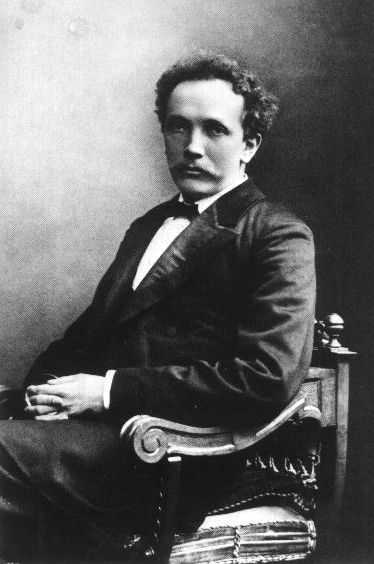
理查‧史特勞斯(Richard Strauss)生於慕尼黑,其父親是個法國號演奏家,給了他一個很好的音樂環境,自六歲起就開始學習鋼琴、小提琴、音樂理論與作曲。與華格納的姪女莉特結婚後,加上平日的耳濡目染,逐漸感染了華格納的風格。
當我們想到理查施特勞斯( 1864年至1949年)的作品時 ,總會是他的大型歌劇如瑰騎士和音樂詩(Tone poems)。然而,他也寫了200首情意綿綿歌曲,其大多數歌曲於1906年前是為他的妻子而寫的。然而施特勞斯於1906年和1918年間卸沒有再寫歌曲,這不僅是因為他專注於歌劇,而且還因為他與出版商的一個版權糾紛。
Richard Strauss (1864-1949)
When we think of Richard Strauss (1864-1949), it is usually associated with his large-scale operas and tone poems. Yet he also wrote over two hundred songs, many of them of exceeding intimacy. The majority of the songs Strauss wrote before 1906 were intended to be performed by his wife, Pauline de Ahna, with him at the piano. Between 1906 and 1918, Strauss wrote no songs at all, not only because he was concentrating on opera but also because of a simmering copyright dispute with the publisher Bote & Bock.
Acht Lieder aus Letzte Blätter, op. 10
Zueignung(Opus 10, No. 1)
"Zueignung," the three verses open similarly but each develops differently building to an emotional climax at the end. Each verse begins in the same way, but through a series of ingenious twists to the melodic and harmonic direction, Strauss achieves an extraordinary build-up of emotional temperature, which culminates at the close in explosive gratitude to the absent lover.
Ja, du weißt es, teure Seele, dass ich fern von dir mich quäle, Liebe macht die Herzen krank, Habe Dank.
Einst hielt ich, der Freiheit Zecher, Hoch den Amethysten-Becher, Und du segnetest den Trank, Habe Dank.
Und beschworst darin die Bösen, bis ich, was ich nie gewesen, heilig, heilig an's Herz dir sank, Habe Dank.
********************************************
Yes, you know, dear heart, that far from you I am tormented. Love makes the heart sick - thank you!
Once, revelling in liberty, I raised high a goblet of amethyst, and you blessed the draught - thank you!
And you banished the evil away, till I was purified as never before, and sank onto your breast - thank you!
Allerseelen(Opus 10, No.10)
"Allerseelen" is a richly ornamented evocation of lost love. It is the last of the set, has a rich atmosphere, evoking reminiscences of love. The text is ambiguous at first and it is not until the final stanza that the mention of flowers on a grave confirms that the poet is mourning a dead lover. -----
Stell auf den Tisch die duftenden Reseden,
Die letzten roten Astern trag herbei,
Und laß uns wieder von der Liebe reden,
Wie einst im Mai.
Gib mir die Hand, daß ich sie heimlich drücke
Und wenn man's sieht, mir ist es einerlei,
Gib mir nur einen deiner süßen Blicke,
Wie einst im Mai.
Es blüht und heut auf jedem Grabe,
Ein Tag im Toten frei,
Komm an mein Herz, daß ich dich wieder habe,
Wie einst im Mai.
*************************************
Lay on the table the fragrant mignonette and the last red asters, and let us speak again of love, like once in May!
Give me your hand that I may press it secretly - and if anyone should see, what does it matter? Then give me just one sweet glance, like once in May!
Today each grave is fragrant with flowers. For one day in the year the dead are free. Come to my heart that I may hold you again, like once in May.
2009/07/02
豎琴考試
標籤:
音學
豎琴考試

剛收到豎琴考試的成績。
幸運地順利過關,而且還是一個令我喜出望外的成績。確實令我非常雀躍和十分鼓舞!
雖然已一把年紀的我可算是身經百戰,這些年來曾經面對過不少不同種類的考試。有些朋友最怕駕車考試,而我就對音樂考試始終是最沒有信心的。因為自己常常認為樂曲演奏的最基本要求應是準確度, 然後就是表達和演譯. 而對我只擁有fuzzy思維的人, 要有百分百準確的演奏實在有點難度! 所以考試時每每有一些錯音都令我非常擔心會不及格. 這次當然也有錯音和失準的地方, 但仍可有不錯的成績令我對音樂試添多了少許信心!
今次見笑地只是三級考試, 說實話我從未考過三級的. 鋼琴是五級而聲樂一開始便考六級, 但發現原來緊張情度是一樣的. 選擇三級是學琴時間太短, 很多技術未能好好掌握. 但是又希望可以考考試來證明購買這件昂貴樂器是沒有錯的! 只是這次成績還要多謝聲樂老師多年的教導, 令我可以點滴存留一些音樂知識和歌唱技巧, 讓oral可獲取滿分. 豎琴老師的鼓勵也增添了我sight-read的信心, 令我在sight-read中居然是'Almost all correct'的評語而不是在五級鋼琴試中的"A bit careless in design!!!"
考官在最後評語還鼓勵我努力學豎琴, 但不要放棄歌唱呢!


人生在有限的時間知資源下可以努力為興趣而奮鬥, 還有威廉和朋友們的支持, 自覺是一位幸福的小師奶! 謝謝!!!
continue reading "豎琴考試"

剛收到豎琴考試的成績。
幸運地順利過關,而且還是一個令我喜出望外的成績。確實令我非常雀躍和十分鼓舞!
雖然已一把年紀的我可算是身經百戰,這些年來曾經面對過不少不同種類的考試。有些朋友最怕駕車考試,而我就對音樂考試始終是最沒有信心的。因為自己常常認為樂曲演奏的最基本要求應是準確度, 然後就是表達和演譯. 而對我只擁有fuzzy思維的人, 要有百分百準確的演奏實在有點難度! 所以考試時每每有一些錯音都令我非常擔心會不及格. 這次當然也有錯音和失準的地方, 但仍可有不錯的成績令我對音樂試添多了少許信心!
今次見笑地只是三級考試, 說實話我從未考過三級的. 鋼琴是五級而聲樂一開始便考六級, 但發現原來緊張情度是一樣的. 選擇三級是學琴時間太短, 很多技術未能好好掌握. 但是又希望可以考考試來證明購買這件昂貴樂器是沒有錯的! 只是這次成績還要多謝聲樂老師多年的教導, 令我可以點滴存留一些音樂知識和歌唱技巧, 讓oral可獲取滿分. 豎琴老師的鼓勵也增添了我sight-read的信心, 令我在sight-read中居然是'Almost all correct'的評語而不是在五級鋼琴試中的"A bit careless in design!!!"
考官在最後評語還鼓勵我努力學豎琴, 但不要放棄歌唱呢!

人生在有限的時間知資源下可以努力為興趣而奮鬥, 還有威廉和朋友們的支持, 自覺是一位幸福的小師奶! 謝謝!!!
訂閱:
文章 (Atom)